back
back
New Visions of Glitch Art
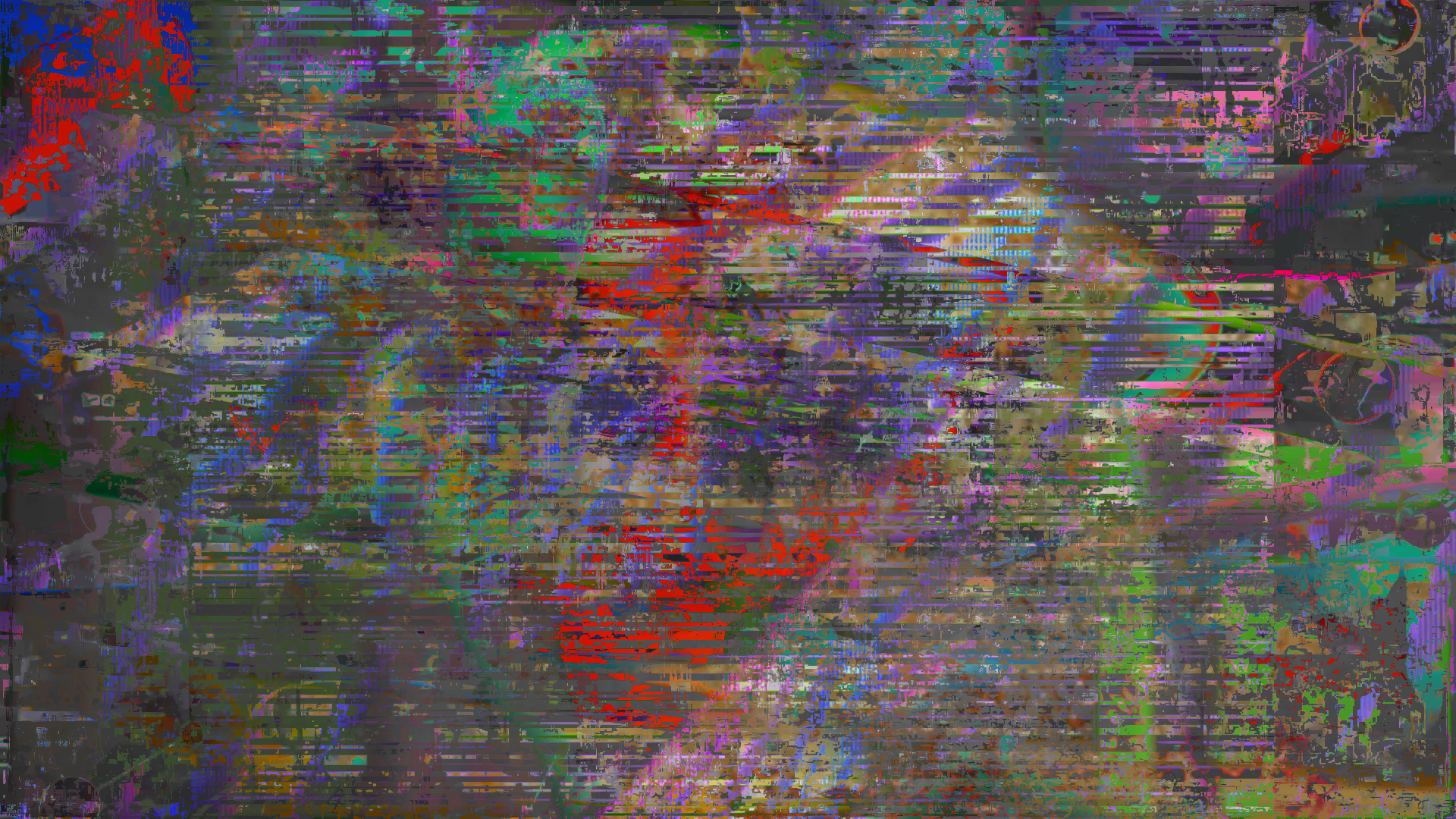
From the perspective of contemporary artistic aesthetics, glitch art has gained particular popularity among younger generations. What once functioned as experimentation has now solidified into a recognizable style. Yet the core of glitch art lies not merely in its visual appearance, but in the technical and conceptual knowledge required to produce it. To achieve specific effects, artists must engage with coding—through programming languages, software environments, or self-developed computational strategies. This technical knowledge is not ancillary; it fundamentally contributes to the artistic value of the work itself.
This selection of glitch works is based on an equal relationship between image and sound. The artists explore rhythmic transformations of signals, colors, or black-and-white graphics, translating them into compositions that are harmonious—though for some viewers deliberately irritating. Most works are presented in short formats, with the exception of the final piece, which appears to sublimate and synthesize impressions from the entire selection.
The artists represented come from a wide range of countries, including Italy, Hungary, Ecuador/USA, Germany/Croatia, Brazil, Slovakia, the Czech Republic, Ireland, and Canada. However, this geographical diversity is not immediately legible in the works themselves. All artists operate within globally accessible, software-based production environments, yet each produces distinctly individual and highly idiosyncratic results.
The program presents eleven abstract glitch-art videos, most of them almost entirely non-narrative. A notable exception is One Minute in the Mind of a Digital Artist Online (2017) by Italian artist Dom Barra, which introduces the human voice to intensify the sense of chaos and confusion associated with personal experience and the condition of permanent online presence. Created using a Samsung Galaxy J5 smartphone and social media platforms as both medium and subject, the work constructs a closed dramaturgy that distinguishes it from the rest of the selection.
Most of the videos reject classical dramaturgy altogether. Their durations follow the artists’ intuitive sense of timing, either through abrupt compression or extended tension. Many of the works seem conceived as, looking like playful experimentation with software, often partially self-invented or hybridised through unconventional combinations—becomes performative in itself. Duration of most of the videos seems as it can last as long the situation in which is played, allow.
Among the eleven works, Hungarian artist Zsolt Gyenes introduces mostly analog elements. Drawing on the “aesthetics of failure,” he implements fusion processes between multiple image and sound formats, forming what he describes, after Michel Chion, as a “synchretic” relationship grounded in the concept of synchresis.
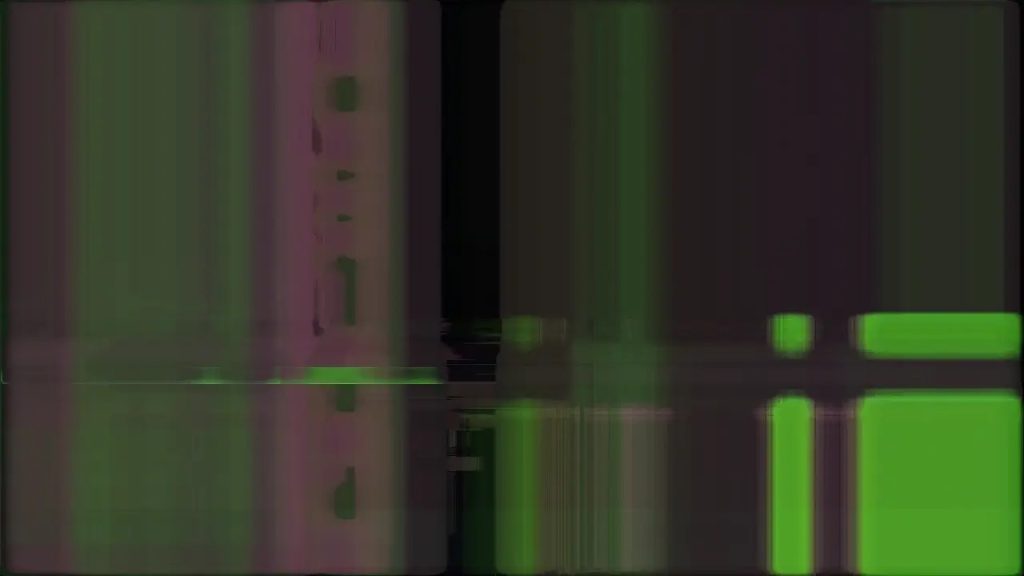
Zsolt Gyenes [HU] : Lux Or [2024, 02’02”]
Dom Barra’s contribution stands apart through its narrative closure. By combining degraded recordings from an outdated smartphone with layered audio-visual software processes, the work articulates the artist’s frustration with accelerated digital culture and social media overload, as already mentioned.
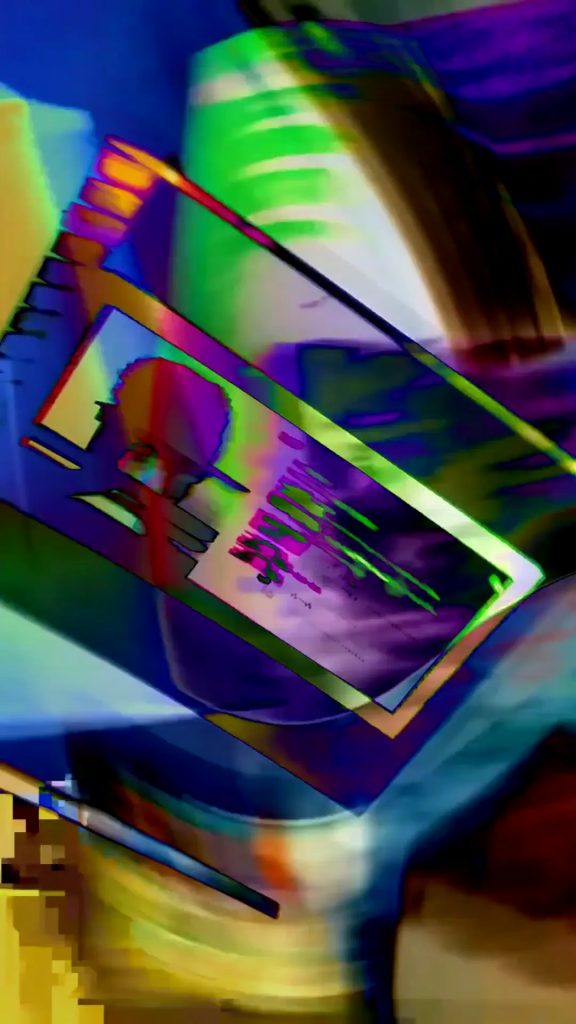
Dom Barra [IT] : One minute in the mind of a digital artist online [2018, 01’36”]
American artist Espinosa, born in Ecuador, presents the 24-second video Sinapsis, which zooms into visuals generated through a multi-step signal-processing chain. The accompanying digital music reinforces the sensation of immersion. As the artist states, the video originates from Space Engine, a universe simulation software, aiming “to reveal the unseen, to commune with the hidden forces of nature.”
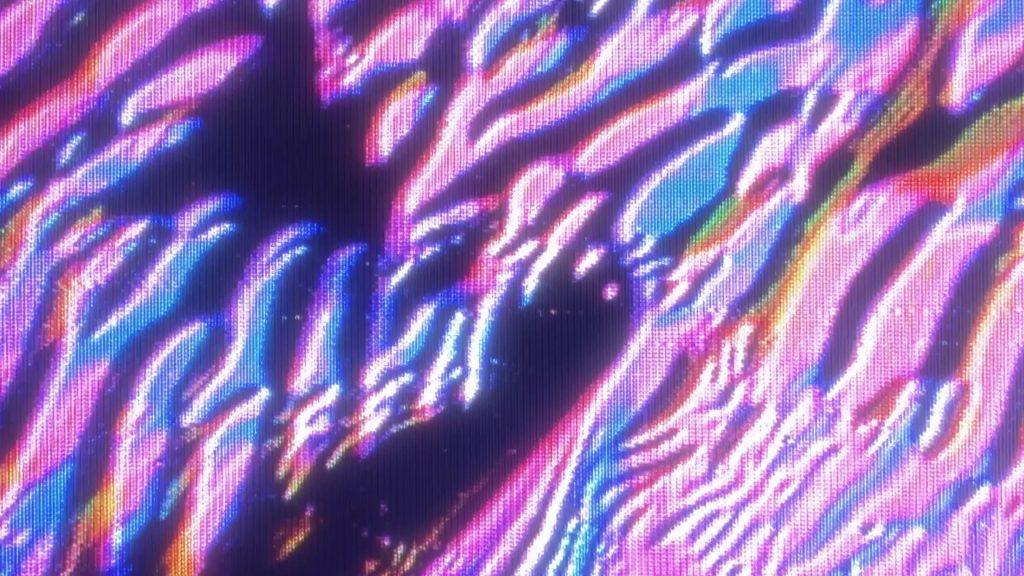
Slovak artist Daniela Olejníková (also known as paranthre or velvet_bites) references visual poetry in Mlvch’s Square. With an academic background in philosophy, her work moves between conceptual and visual poetry, glitch art, vaporwave aesthetics, occult imagery, and noise music. Using datamoshing, layered blending techniques, and harsh noise compositions, she integrates manipulated YouTube footage to strip away semiotic meaning and approach a state of pure abstraction.

Daniela Olejnykov (a.k.a paranthre, velvet_bites_) [SK] : Mlvch's square [2018, 03’42”]
Croatian artist Nebojša Vuković (aka Agens 111), based in Berlin, presents Amazed as F111, or If I Was a Human Being. Drawing inspiration from H. R. Giger’s biomechanics aesthetics, the work combines found internet images, animated graphics, and programmatic manipulation using Adobe Premiere and VJ software Resolume Arena. Dark, semi-realistic visuals, suggestive of weapon imagery, are paired with synthesized noise composed by Croatian artist Fuego.
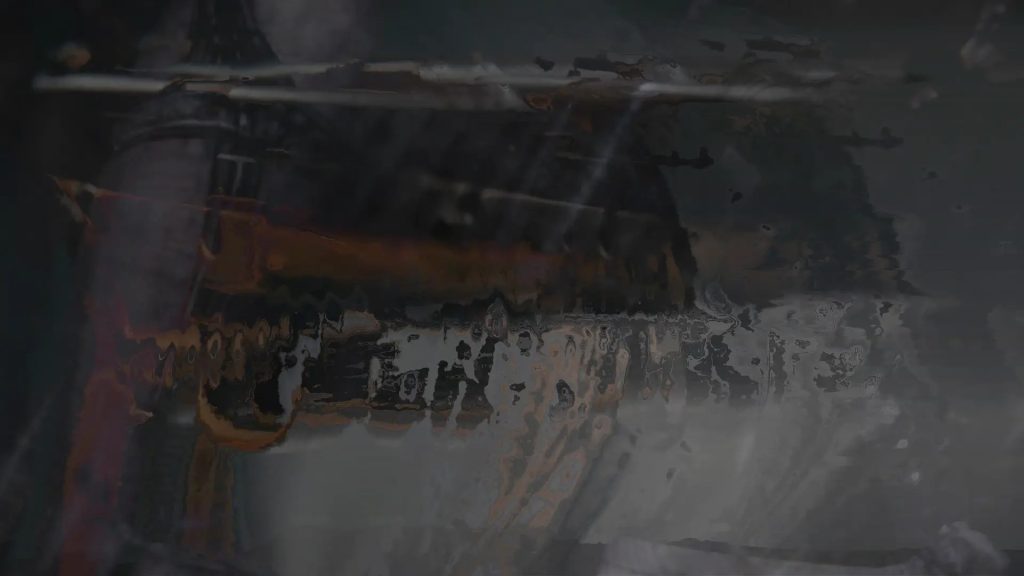
Agens 111 [DE] : Amazed as F111 [2024, 02’25”]
Brazilian composer, musician, and visual artist André Perim explores the dialogue between analog and digital worlds in MOFO/MOLD. Microscopic and macro photographs of fungi are digitally reprocessed until their original forms dissolve, giving rise to new graphical structures. The result is an abstract, surreal atmosphere that offers a critical reflection on the relationship between technology and language in the digital age.
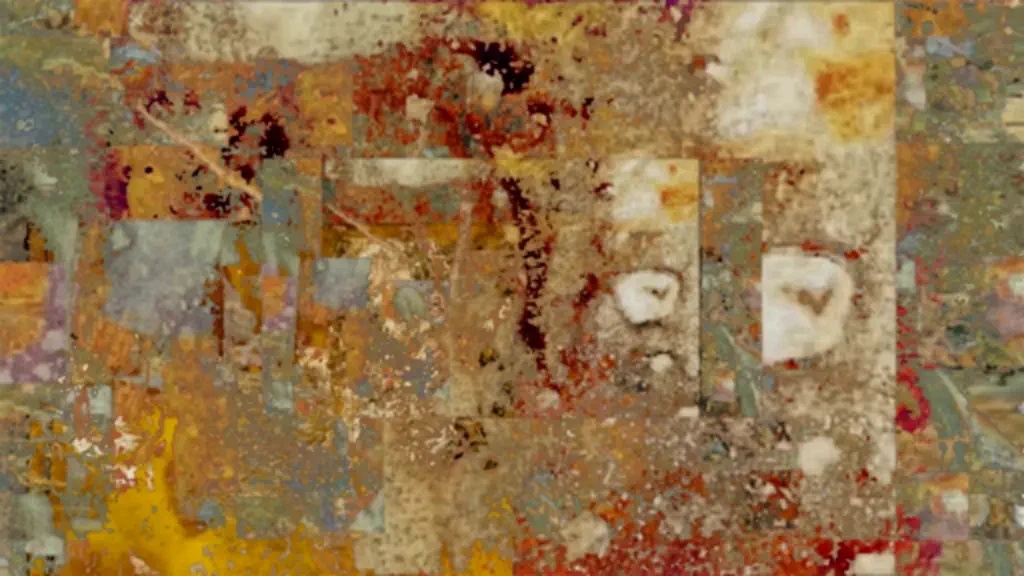
Andre Perim [BR] : MOFO/MOLD [2022, 03’26”]
In Ease Est. Percipere, Daniela Olejníková employs Cisco IOS XE—a Linux-based network operating system—as conceptual reference, engaging with notions of programmability, automation, and modularity as aesthetic and structural principles.
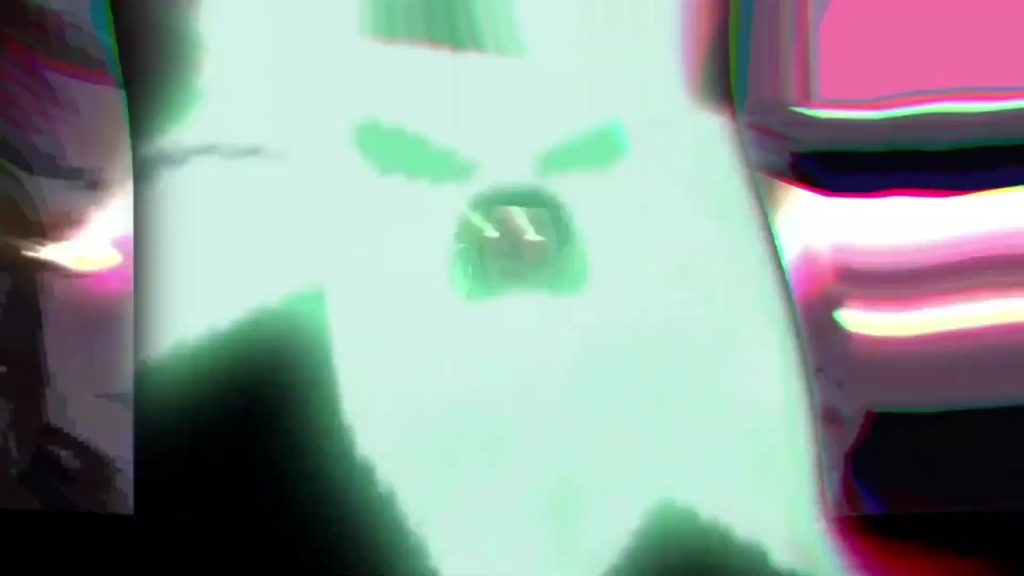
paranthre, velvet_bites_ [SK] : Esse est. Percipere. [2023, 00’23”]
Italian artist Aaron Inker, whose practice bridges science, science fiction, philosophy, and scientific data, presents in Dark Matter. The video manipulates images generated by various AI systems, subsequently articulated and filtered in response to sound. The work explores synesthetic image–sound relationships and, reflecting the artist’s VJ practice, suggests potentially open-ended duration depending possibly on the event context.
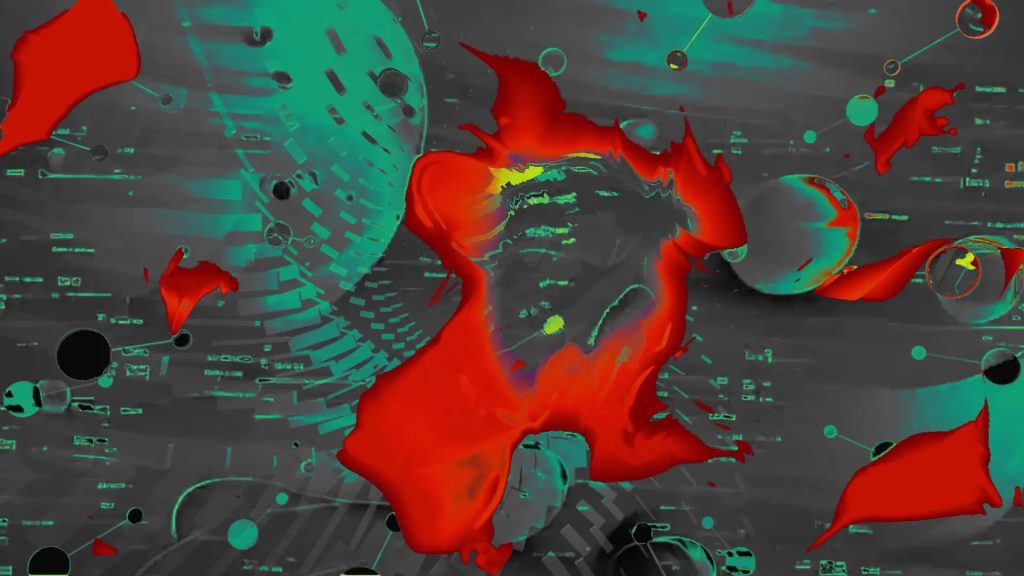
aaron inker [IT] : Dark matter [2023, 04’20”]
Czech artist Robert B. Lisek uses an analog video synthesizer in FIELDS. As an meta-composer he monitors audio-visual events and intervenes in the structure according to a trained model. Lisek is a one of the pioneers of AI- and machine-learning-based art, as well as a composer working across contemporary, concrete, noise, stochastic, and futurist music. His interdisciplinary expertise spans fine art, media art, interactive systems, creative coding, and advanced mathematical theory.
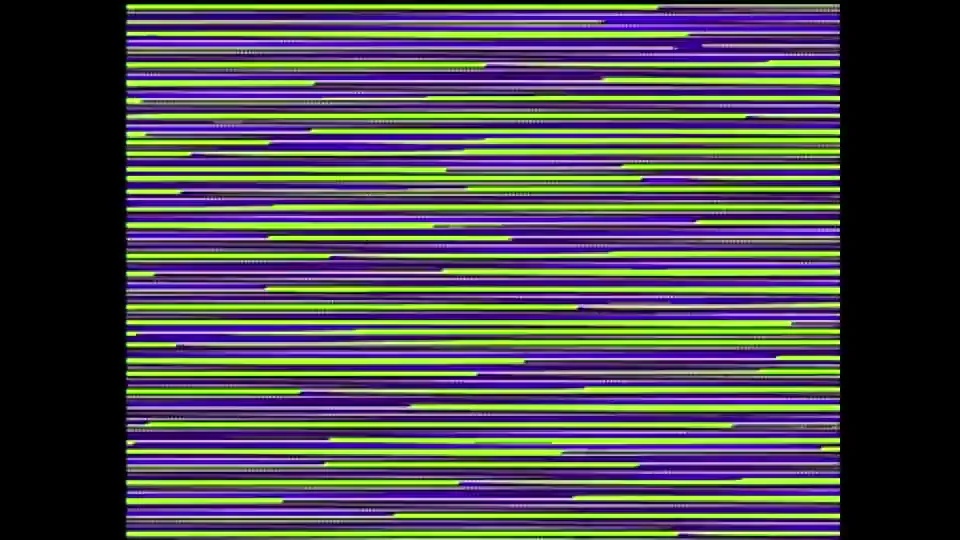
Robert B. Lisek [CZ] : FIELDS [2022, 03’39”]
Irish artist Josh Brown’s First Wave assembles thousands of images captured from the internet using stop-motion techniques. The soundtrack is derived from contact recordings of a semi-musical sculpture constructed from slate, wire, string, aluminium, and rivets. Brown’s background includes extensive professional experience in cinematography, editing, motion graphics, and drone flight.
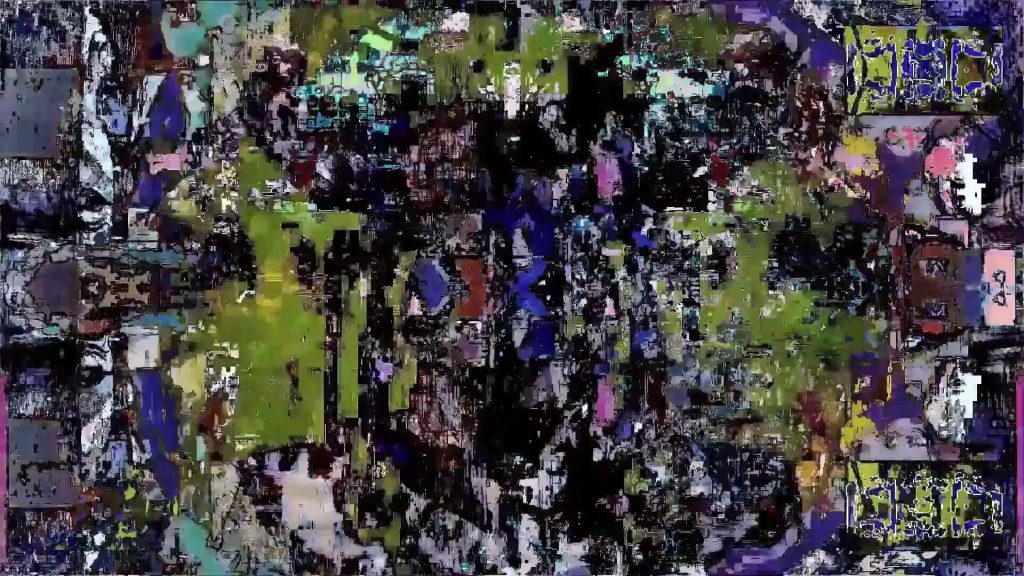
Josh Brown [IE] : First Wave [2023, 03’37”]
The selection concludes with the Canadian artist Harman Burns and her work CHCKNSKN. The soundtrack is produced by running a synthesizer through multiple layers of delay feedback and distortion, then digitally stretching and warping the audio to the point of near disintegration. Found footage undergoes similar time-distortion through video feedback, generating elongated ribbons of frozen frames. This compression and extension of time induces a hypnotic state in which meaning dissolves from familiar visual symbols, pushing perception toward sensory oblivion.
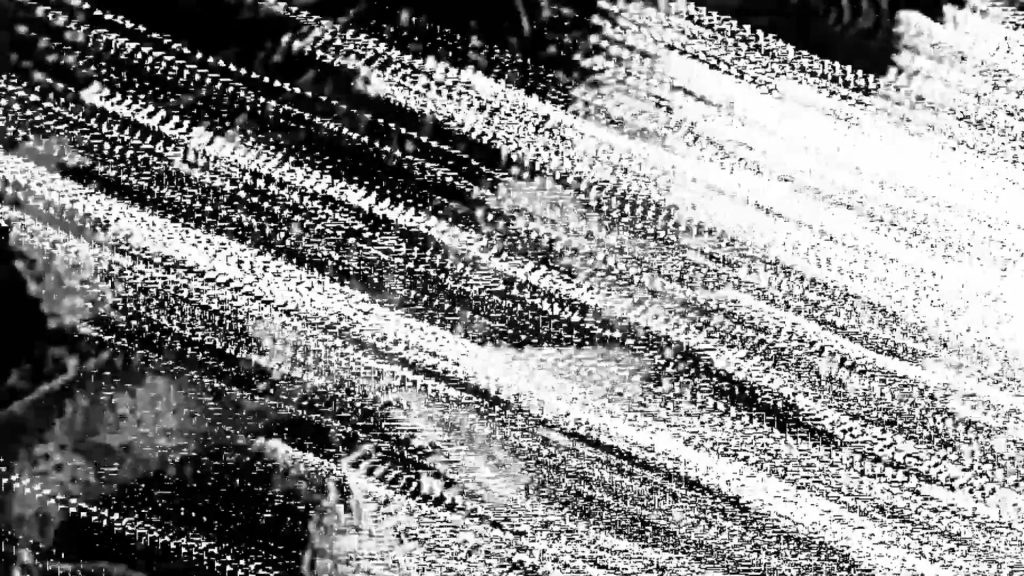
Harman Burns [CA] : CHCKNSKN [2023, 17’05”]
To conclude this part of the program selection for the Glitch Art Festival 2025, it is important to note that without the artists’ descriptions of the software and technical processes used to create their glitch video works, I would not have been able to fully understand the technological achievements involved. These insights reveal how artists are willing not only to learn and use existing technologies, but also to invent and adapt their own models. The result is a program that is both highly informative and deeply enjoyable to watch.
Curatorial selection and text: Ingeborg Fülepp
Ingeborg Fülepp is a Zagreb/Berlin-based media artist, film editor and curator, known for her video, interactive and multimedia installations and for teaching and curating new media art in Europe and the US.

This text is part of Fubar 2025 × Fubar FILM production.