back
back
“The Spirit of Our Time” — Avant-garde Film of the Post-Cinema Era
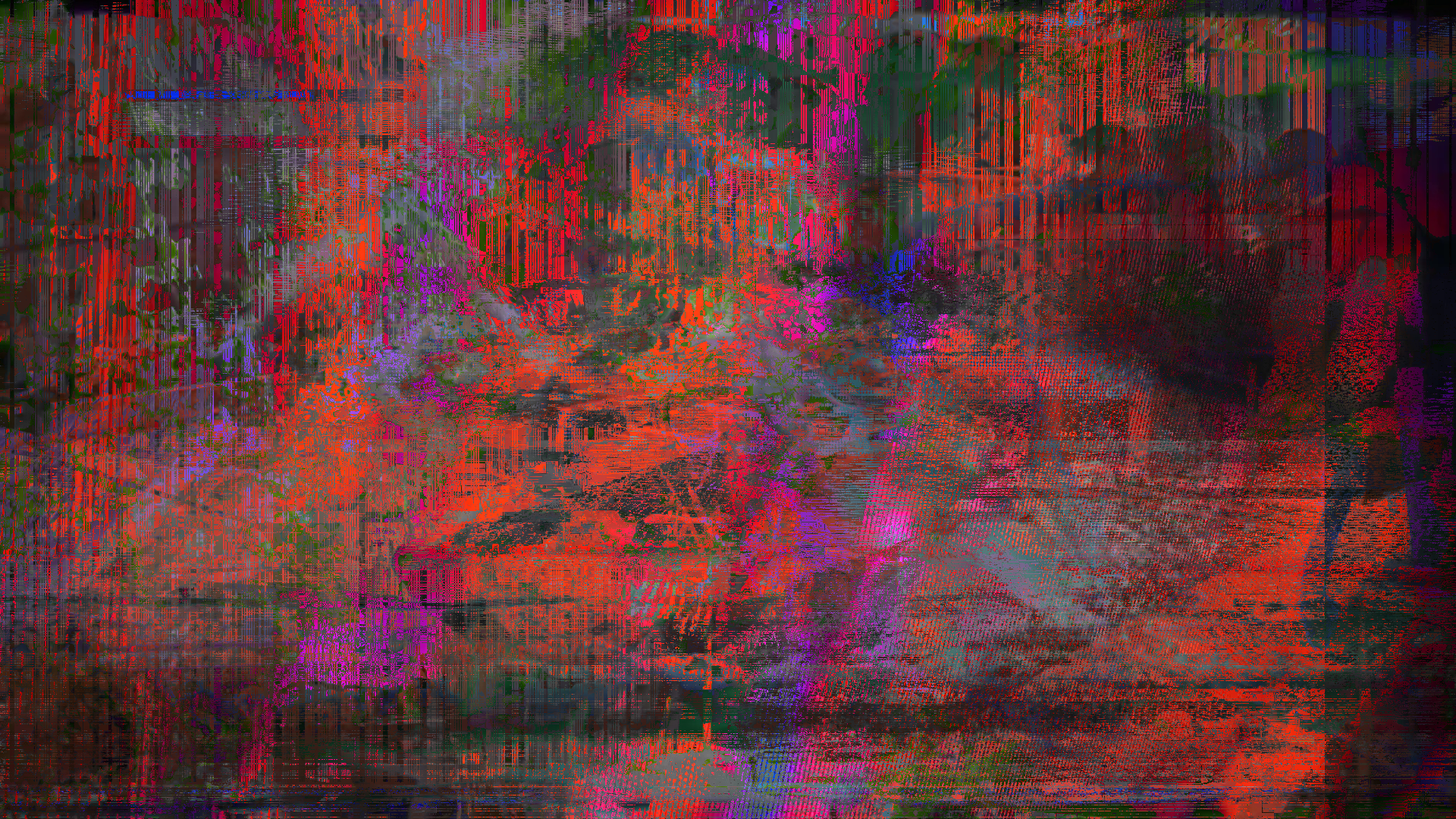
Confronted with the archive of glitch works with the intention of curating a film program, I caught myself trying to locate cinema — or at least works that would possess something recognizably cinematic, a familiarity of the world I know and live in. What I found instead was something unheimlich, an experiential dislocation worthy of the full sense of this German word (un-homely). An image in movement, a home, which is not cinema. My pursuit may have been misguided from the outset, as there was hardly no trace of cinema in the classical sense, nor of its historical avant-garde: no Brakhage, no Mekas, no Deren, no Ford, no Bergman… — not even as an absent reference or an object of negation.
Within the field of glitch art, which often presents itself in the form of moving images, cinema appears neither as a norm nor as its opposition. When something familiar does surface, it does so only at the level of media in its broadest sense: analogue versus digital; VHS culture as a ghostly residue haunting our grown-up digital realities; television less as a medium but more as a concept — once a central fixture of the homely world, now replaced by the computer screen, in which it is being transformed into a kind of Wunderkammer filled with obsolete curiosities, ready to be reused and repurposed by the twenty-first-century artists. An Image of Artist at Work by Somfay presents itself as a perfect embodiment of that constellation, a new type of dispositif — both when it comes to the spectator and the producer alike.
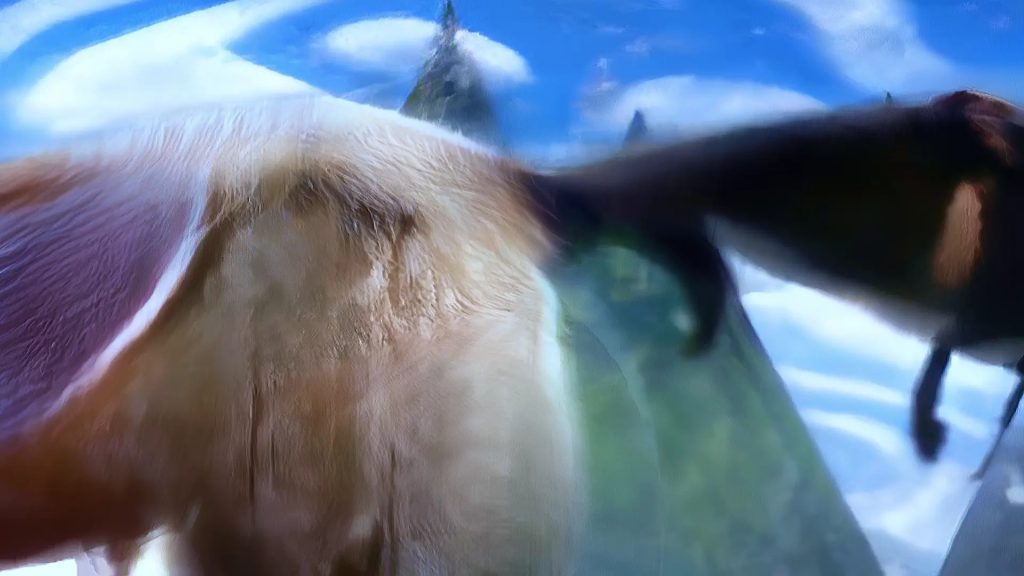
Dalena Tran [US] : Incomplete [2021, 03’30”]
When glitch works explicitly enter the field of cinema through direct quotation or reference, the effect can be strangely unsettling, unheimlichkeit amplified to its extreme. Such is exactly the case with Kids Forever by Milo Masoničić or with Dada Electronika by Thomas Valianatos, who are digitally dissecting and defamiliarising iconic works of modernist cinema — Spirit of the Beehive (among others) and La Notte respectively, only to plastically show us that cinema “once was…” and that the world of Victor Erice and Michelangelo Antonioni no longer is… The cinema appears as a distant dream, as in Paul Beaudoin’s From Here to There, whose digitally transformed cinematic “reality” and the blank stares of the archetypal faces of Hollywood cinema uncover the eeriness of its own construction. We need a different approach today.
By contrast, works built from scratch, based on mathematical algorithms — like Claude Heiland-Allen’s Flaking Out — or derived from degraded television archives, such as Francisco Tojeira’s Analogue Faces in Digital Past — feel unexpectedly open, even soothing, as if the work of their form is operating according to a different logic of attention and invention, more attuned to what we are living in the moment.
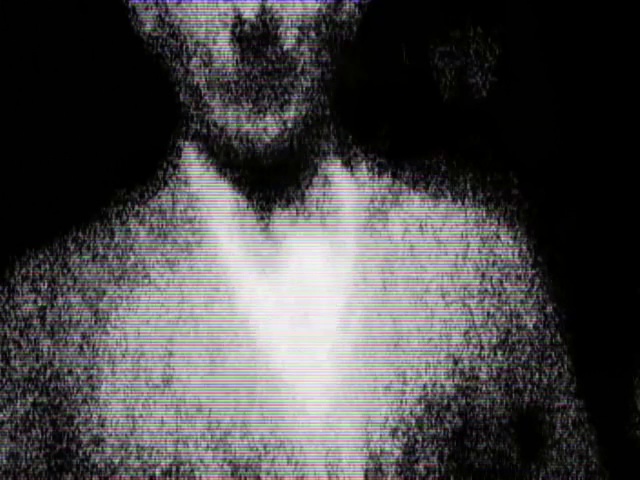
Bob Georgeson [AU] : The Colour of Dreams [2022, 02’39”]
For over a decade now, the academic film community is trying to unfold what has been labeled as post-cinema. Is cinema defined by its materiality, and since it is no longer made on celluloid — can we still call the contemporary “filmic” horizon cinematic? Or should we think about post- in terms of -cinema once being a cohesive and self-contained (even if open-ended) narrative, a story or a two-hour-long event produced for the theatre hall (or television screen as its extension)? Is cinema a “multiplicity” in constant motion, a certain “configuration of elements”, with it’s post- therefore being as elusive and as undefinable as -cinema itself? Whatever the answer to these questions may be, whenever I depart from experimental cinema I learned to know as such, I arrive at a commonsensical notion of “cinema”, a firm center as something we all still agree on as the world we know.
Confronted with fragments of this recognizable world — even if being radically defamiliarized — here I encountered a field in which cinematic values not only fail to apply, but seem to have no relevance or function at all. This coherent and mutually recognizable community operates outside the dominant cinematic structures — even those of contemporary or historical experimental cinema — and it seems as if it has grown so expansive that it threatens superseding those structures altogether, rendering them obsolete not through opposition but through indifference. Like in Constant Voisins’ Hakuba, a car infinitely going nowhere in a state of complete quiet satisfaction (content), or the dolphins from Sabato Visconti’s Hauntologies peacefully roaming in the endless digital sea of childhood memories.
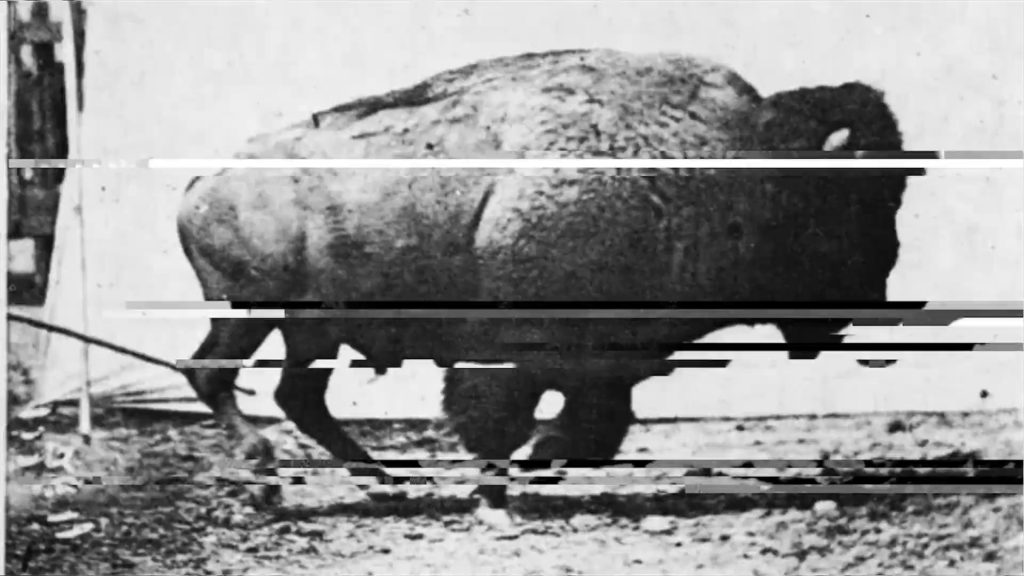
Paul Echeverria [US] : Mobile Devices [2022, 05’22”]
If the historical cinematic avant-garde required cinema in order to exist — required a norm to negate — the glitch works from the Fubar archive appear to require no such counterpart. These films exists by and for itself. Its authors invest time and research not in opposition, but in exploration — of what it means to be absorbed in the digital world, to have memories created by the electronic machines, and to navigate both the living nightmares and the idyllic reveries of the 21st century. I completely believe everything Henrique Cartaxo is telling me in his Seascapes & Shores triptych, I see very clearly what he tells me I’m supposed to — the beach, the sand, the rain he feels on his skin and even his son who is yet to be born — all of that is buried under layers of digital strata derived from his (cell-phone) memories, but this only makes me see it even more vividly. And I am equally moved by Carolina Soares’ Nihilismo Digital, when she tells me all the things I already knew: that “we inhabit a two-dimensional space”, and that the “human existence is intrinsically dependent of time”, that “we’re ephemeral beings” who “capture images / and mark moments in time / in a futile attempt to mark our existence / so that nothing is in vain”… The way she visually says these things makes me think of Marker’s Sans Soleil, one of the most poetic cinematic essays on the nature of time, visuality and the connection between the image and our sense of being, and I realize its questions of space, time and memory belong primarily to another visual regime, another reality so different than the one we are experiencing today. A reality in which the cinematic iconoclasm of Jean-Luc Godard did present itself as the lighthouse for the sane, but today its methods are seemingly no longer of use.
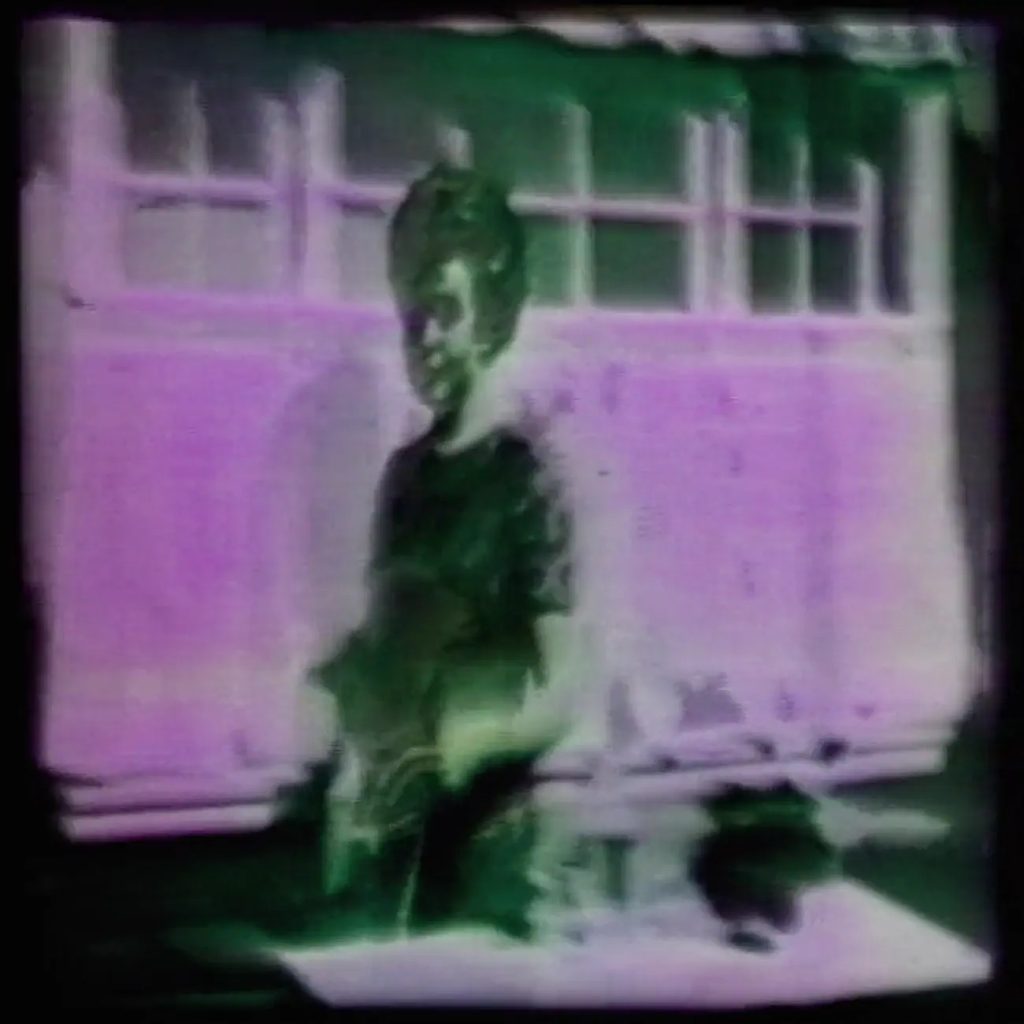
Gino Battiston [AR] : Beware Spamart [2023, 01’45”]
In this sense, glitch film might be seen as a fulfillment of unrealized desires articulated within certain strands of 1960s avant-garde cinema — Yugoslav antifilm in particular — where provocation was ultimately secondary to curiosity, and where the impulse was not to negate cinema, but to move elsewhere entirely: beyond cinema, reaching with the moving image into another register of experience. Cinema is a regressive art, we need to find new ways of expressing our experiences, said Mihovil Pansini back in 1963.
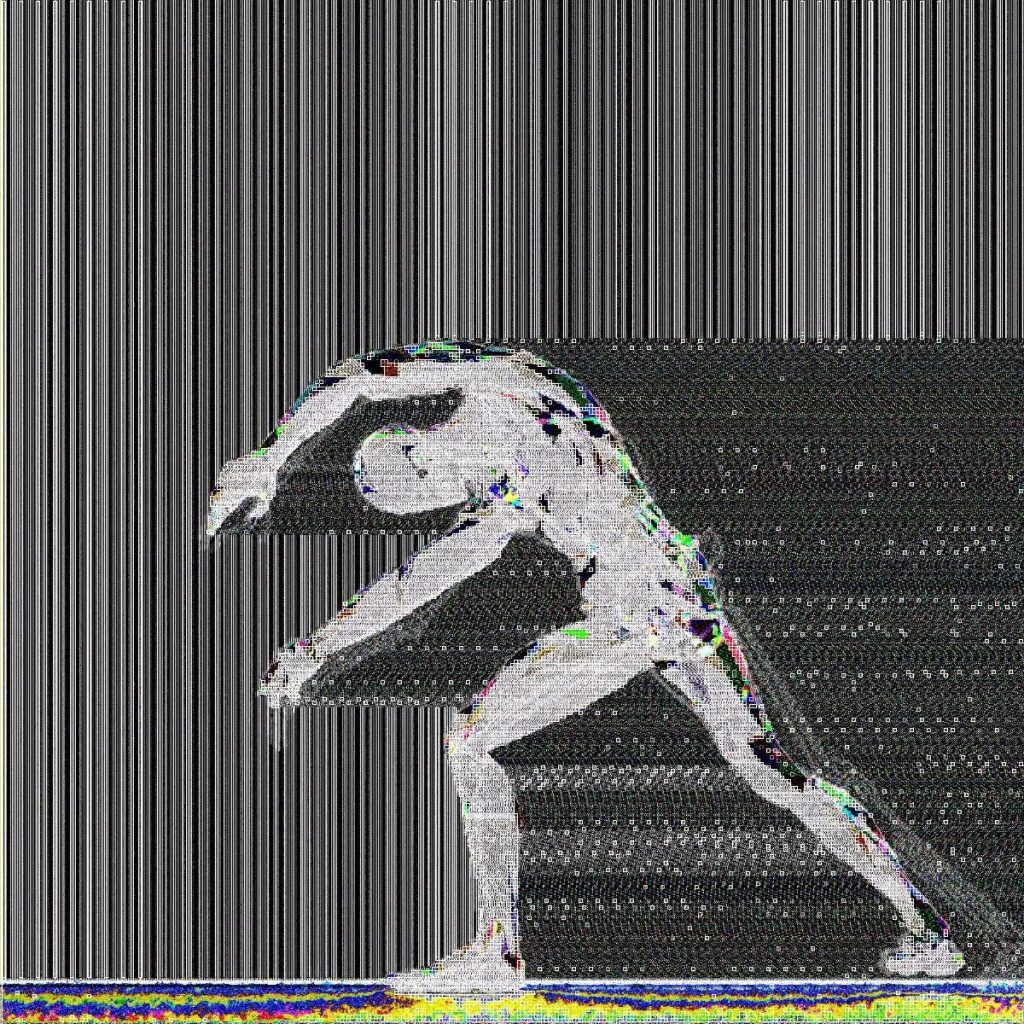
xkprx [PL] : Robot Fairy Tales [2024, 02’13”]
The works from the Fubar archive don’t argue with cinema — they ignore it. Glitch appears here not as an opposition or homage, but as a self-contained practice — which is, yes — founded upon error, obsolescence, and misused media, but a practice which is consequently resurrecting a moving image into a field that doesn’t ask for permission, doesn’t need a norm to break and speaks loud and clear about our contemporality.
Immersion in the Fubar glitch archive leaves me with a curious mixture of fascination and discomfort at my own continued fixation on the historical cinematic avant-gardes of the mid-20th century, yet reminding me that The Spirit of Our Time belongs to Raoul Hausmann, Baron Lanteigne and XKPЯX in an equal measure. Thinking about glitch film through the unheimlich lens of Hausmann’s wooden head reveals an avant-garde cinema calibrated to the measures of its Kopfantenne — contrary to the first impression, a true visual heimat of the 21st century.
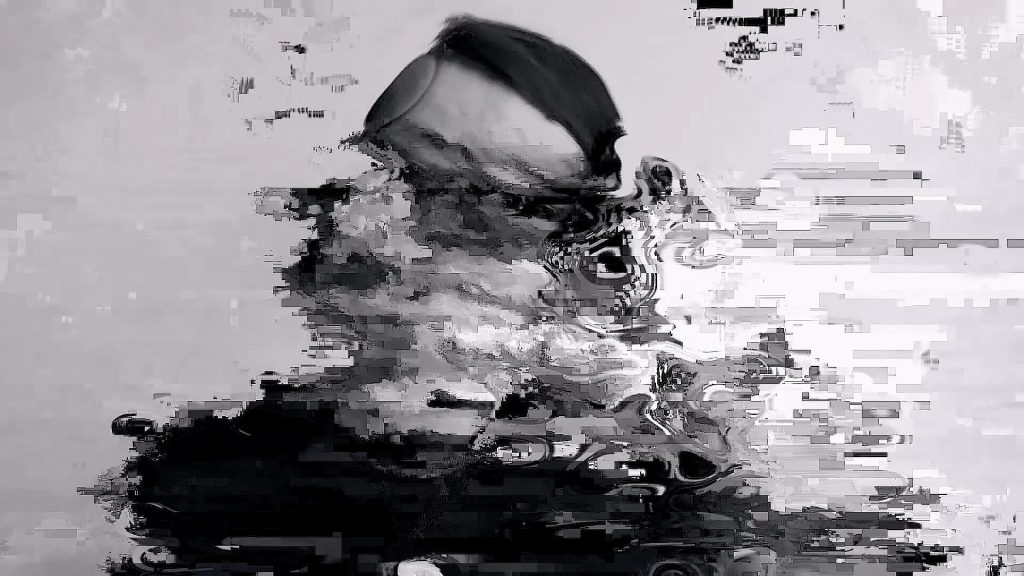
Baron Lanteigne + Derek Piotr [CA] : Grunt [2018, 00’38”]
Curatorial selection and text: Petra Belc
Petra Belc is a scholar, writer, and occasional curator specializing in Yugoslav art and film culture, with a focus on amateur cinema, experimental film, and feminist perspectives.

This text is part of Fubar 2025 × Fubar FILM production.