back
back
Daniel Temkin – Forty-Four Esolangs: Esoteric programming as glitch practice
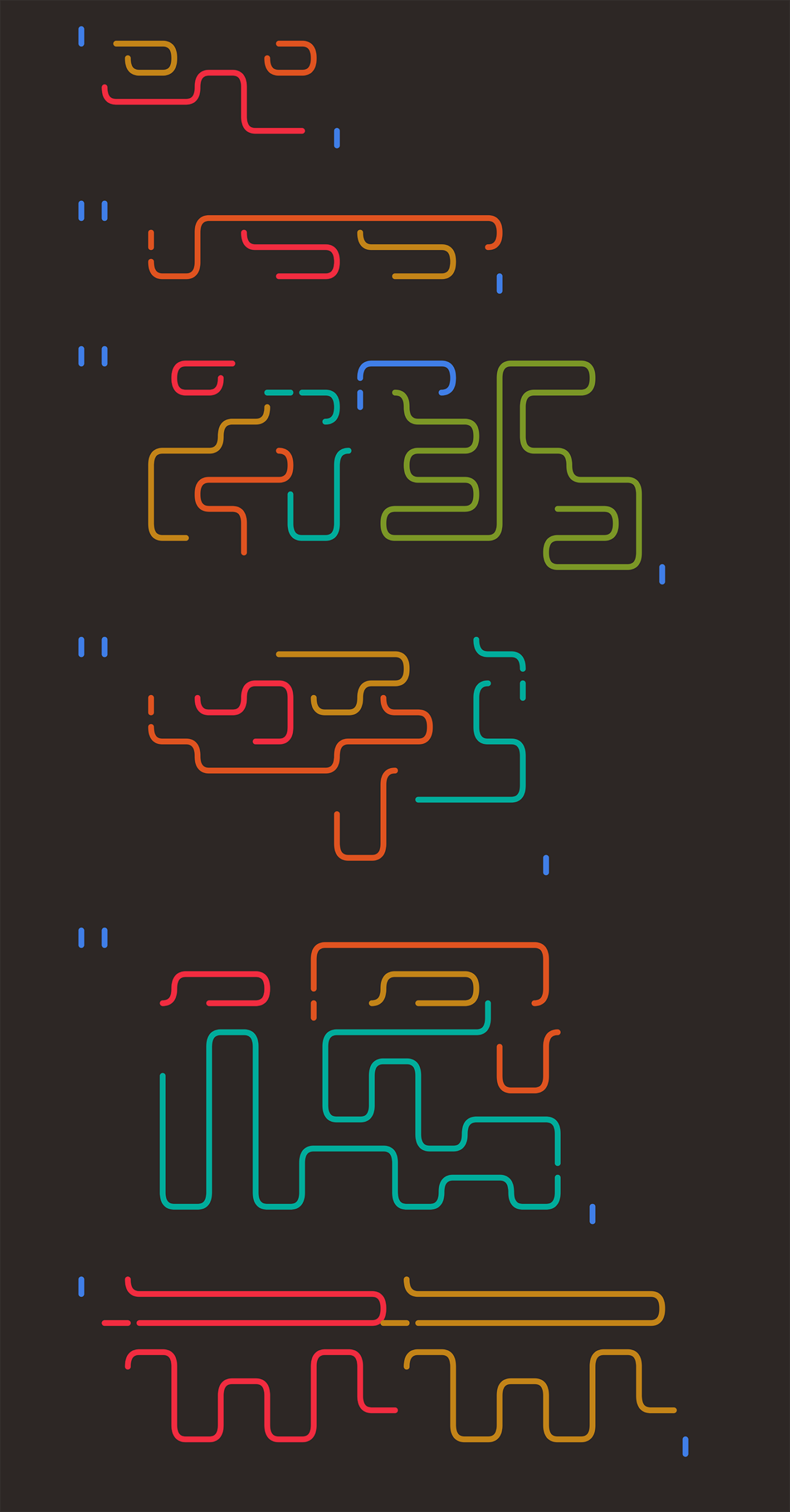
Building on his early glitch work, Daniel Temkin’s esolangs (esoteric programming languages) challenge conventional definitions of language, code, and computer. They ask programmers to write code in the form of prayer to the Greek gods, or as a pattern of empty folders, or to type code in tandem with another programmer, each with one hand on the keyboard, their rhythm and synchrony signifying computer action.
Esolangs are a collaborative form. Each language is a complete world of thought, where esoprogrammers build on the work of esolangers to make new discoveries. The language Velato, for instance, asks programmers to write music as code; while the language creates constraints for the programmer, each programmer brings their own coding and musical sensibility to the language. Other pieces are pure poetic suggestion in the legacy of Yoko Ono’s event scores. These ask the programmer to, for example, follow the paths of the clouds over a single day and construct a language in response that uses those movements as code. Just as Ben Vautier claimed everything is art, this book blurs the lines between computation and everything else.

Daniel Temkin‘s computational and photographic work examines the clash between systemic logic and human irrationality. It includes programming languages where we carry an excess of meaning and gesture to code; he recently published Forty-Four Esolangs, the first artist’s monograph of programming languages (MIT Press, 2025). His language Rivulet has been called the most beautiful programming language, and will be displayed in Paris’s UNESCO building in early 2026.
Temkin’s Straightened Trees are shot on large-format film and then straightened with custom code, warping strip malls, telephone poles and restaurant signs into curves that once belonged to the elms, palms, and oaks they stand beside. His Dither Studies explore the foundational photographic algorithm as acrylic paintings, rendered in colors that “vibrate against each other in a most hyper-chromatic, retinally-stimulating way,” The Brooklyn Rail writes.
He has written about code and programming languages as an art form for publications like Hyperallergic, and in many academic journals including Leonardo and World Picture Journal, as well as his blog esoteric.codes. Esoteric.codes brings together work by artists, writers, and hacker/hobbyists who challenge conventional notions of computing, connecting work that resonate conceptually but emerge across very different disciplines and communities.
danieltemkin.com